Forecasting income in a caseload that changes weekly
What forecast income can honestly tell you, and the three assumptions that make it useless if you ignore them.

Every February, solo practices ask the same question in slightly different words: what is actually coming in? It is a hard question not because the arithmetic is difficult but because a caseload is a moving object. Clients pause. Allocations end. Someone is discharged in March and someone else arrives in April.
A forecast is still worth having. It just has to be honest about what it is.
Two numbers, not one
There are two numbers worth keeping separate, and most spreadsheets blur them.
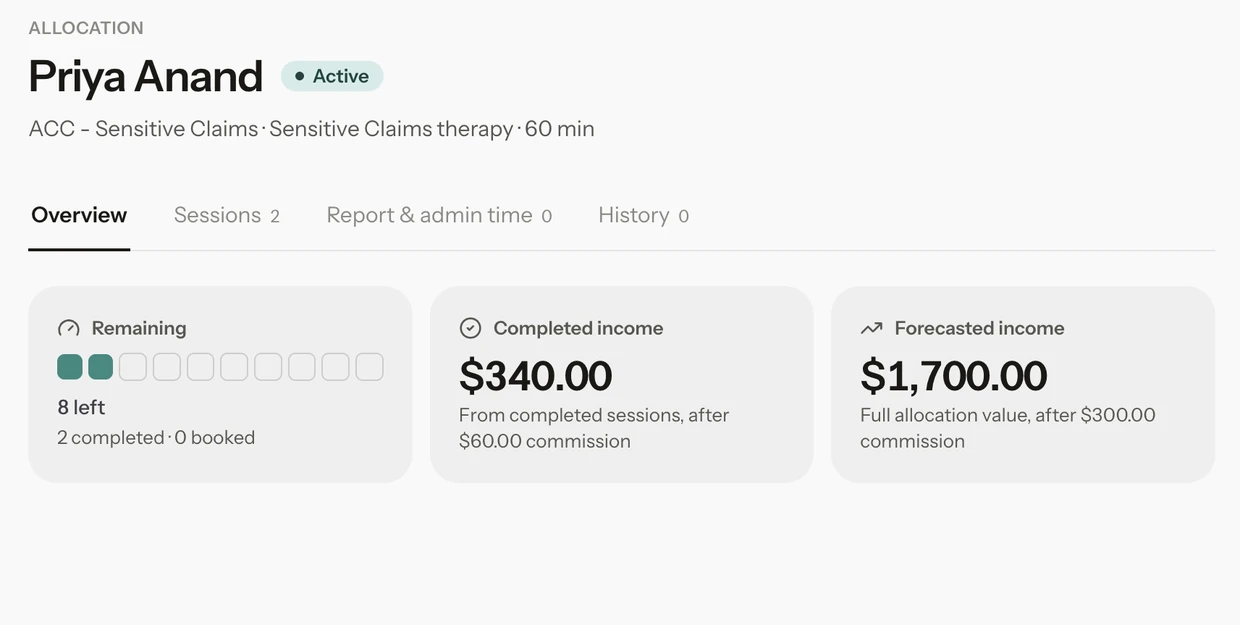
Completed income is what your delivered sessions are worth. It is a fact. Nothing about it depends on the future.
Forecast income is what your current allocations are worth if they all run to their end date. It is a projection, and it is only as good as the assumptions under it.
Keeping them apart is the single most useful thing you can do, because they answer different questions. Completed income tells you what to invoice. Forecast income tells you whether to take on another client.
The three assumptions
A forecast becomes useless quietly, when one of these stops being true and nobody notices.
One: allocations run to completion
Most do not, exactly. Clients finish early, or pause, or move. If your forecast assumes every approved session gets delivered, it is an optimistic ceiling rather than an expectation.
The fix is not a complicated model. It is knowing the difference, and treating the forecast as the top of a range.
Two: the rate on the allocation is the rate you will be paid
Funder rates change, and services get reclassified. If the rate on an allocation was entered nine months ago, it is worth a glance before you plan around it.
Three: nothing new arrives
For a practice with a waiting list this is wildly pessimistic, and for a practice without one it is exactly right. The forecast cannot tell which you are. You have to.
What a forecast is for
Not precision. A forecast is for spotting the month where the number falls off a cliff, early enough to do something about it. If it is accurate to the nearest few hundred dollars and three weeks, it is doing its job.
Read it monthly, not weekly
A caseload that changes weekly produces a forecast that changes weekly, and watching it that closely will only make you anxious. Once a month, alongside invoicing, is enough to catch the two things that matter: an allocation about to expire with sessions unused, and a month with noticeably less funded work in it than the one before.
Both are fixable with six weeks' notice. Neither is fixable with six days'.
Completed and forecast income, without the spreadsheet
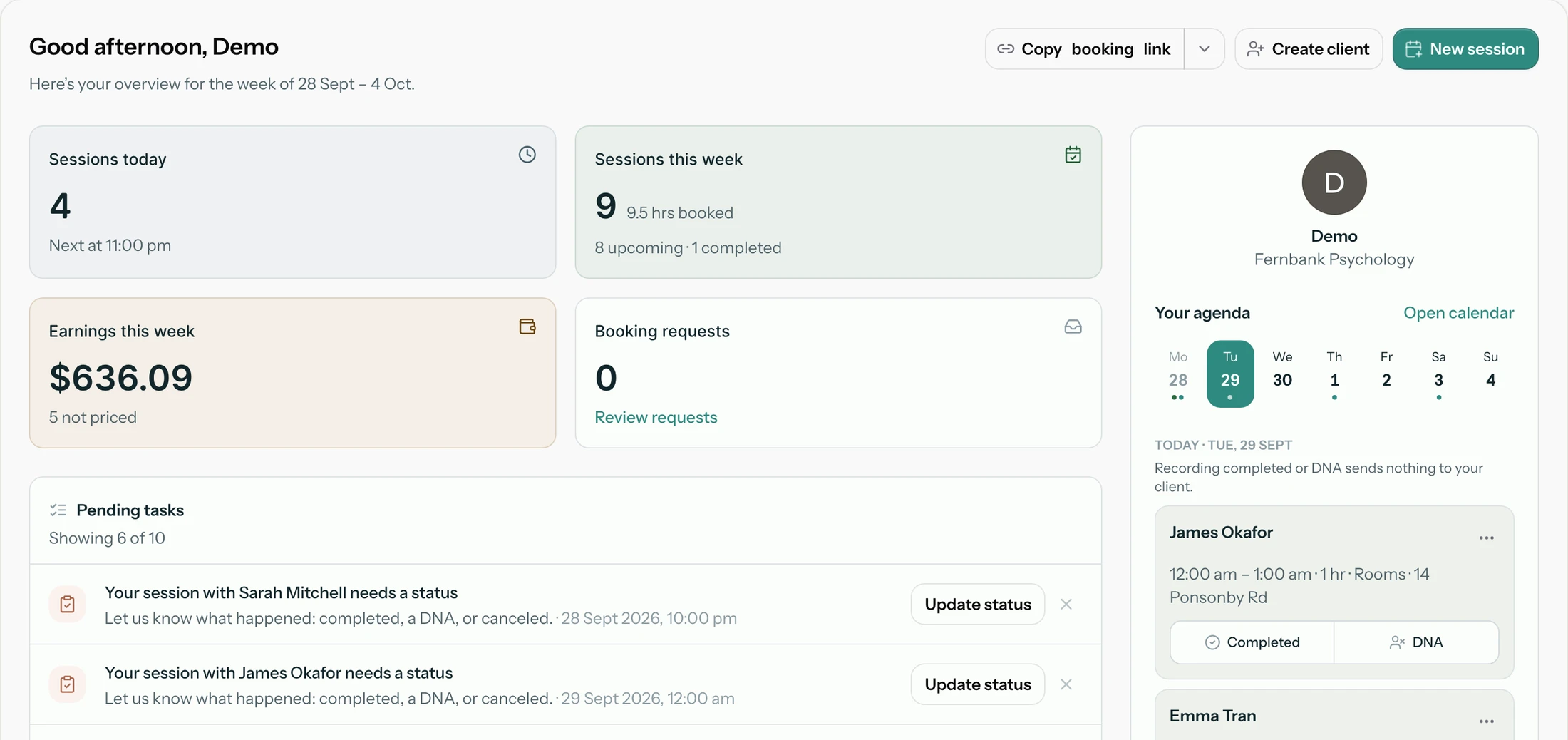
Every allocation carries its funder, service, and rate, so both numbers stay current as you deliver sessions.